Book Appointment Now
Halloween Has Gone, but Are the IPTV Deals Still Worth Grabbing?
Is a late Halloween offer still worth your money now that the pumpkins are in the bin? Several providers have kept their deals running into November, so the question is very much alive for anyone shopping this week. The answer depends less on the headline figure than on two things most banners hide: the renewal price and the number of connections. Judge an IPTV Halloween discount price on its two-year cost, and you’ll rarely get caught out.
Black Friday lands on 27 November 2026, which gives you 25 days to decide. This guide explains how pricing works behind the screen, how to benchmark an offer yourself, what UK consumer law actually protects and when waiting makes more sense than buying. Where I use example figures, I’ve labelled them clearly, because prices in this market change weekly and vary from one provider to the next.
The Short Answer for Early November
Buy now if three things are true. You’ve trialled the provider on a busy evening, the renewal price is confirmed in writing, and the plan includes enough connections for everyone who watches at the same time.
Wait if any of those is missing. A cheap IPTV Halloween discount price from an iptv service you haven’t tested isn’t a saving yet; it’s a guess, and Black Friday will give you a wider field to compare against.
Everything below explains why those three checks matter more than the percentage printed on the banner. None of it requires technical knowledge, just twenty minutes and a little scepticism.
How IPTV Pricing Works Behind the Screen
Most viewers buy from a reseller, often an IPTV reseller UK business, rather than from the company running the servers. Understanding that chain explains why some seasonal offers are sustainable and others collapse within weeks.
Credits, Lines and Expiry Dates
Resellers typically buy credits from an iptv panel provider, then spend them inside a web panel to create customer lines. On many panels, one credit equals one month of service on a single line, so a 12-month subscription uses twelve credits, although some panels price longer terms or extra connections differently.
Credit prices fall with volume. A reseller buying a large batch pays less per credit, and that wholesale margin is the money that funds a seasonal discount. When you see an unusually aggressive offer, it often means a reseller has bought heavily and wants to move stock before the year ends.
Each line also carries an expiry date set inside the panel. When it passes, the line simply stops working until it’s renewed, which is why the renewal price matters as much as the first payment.
What a Connection Really Means
A connection is the number of streams a line can play at the same time, not the number of devices you can install it on. You might set up the app on a Firestick, a phone and a smart TV, yet a one-connection line will usually play on only one of them at once.
Get this wrong and the cheapest plan becomes the most frustrating one. Households with more than one regular viewer almost always need two or more connections, and adding them later is usually dearer than buying them upfront.
Ask the provider how it counts streams that are paused or left open on a second device, because policies differ. The answer decides whether a two-connection plan genuinely feels like two.
Why Yearly Plans Carry the Deepest Cuts
Setup and support take roughly the same effort whether a customer pays for one month or twelve. Spreading that fixed effort across a year is why providers discount the 12-month tier hardest, and why a monthly IPTV Halloween discount price rarely moves far from the normal rate.
Longer terms carry their own risk, mind you. Twelve months paid upfront is twelve months of trust in a business you may have only just met, so the trial and the payment method matter more on a yearly plan than on any other.
Why Prices Vary So Much Between Providers
Server capacity, support hours and licensing costs all differ between providers, so two plans with similar headline features can sit £30 apart for perfectly sound reasons. Comparing on price alone is a bit like comparing broadband deals on download speed while ignoring the contract length.
How to Benchmark an IPTV Halloween Discount Price Yourself
Published price surveys for this market are thin, and any ranges quoted in a blog post go stale within weeks. Building your own benchmark takes about twenty minutes and is far more reliable than trusting any seasonal headline, including mine.
- Shortlist three to five providers. Choose ones you’d genuinely consider, ideally with visible contact details and a free trial.
- Find the regular price. Note each provider’s normal rate for your chosen plan length before any seasonal discount. The Internet Archive’s Wayback Machine is handy here, because it shows what a pricing page looked like in September.
- Record the offer details. Write down the seasonal price, the number of connections included and the stated renewal price.
- Work out the two-year cost per screen. Add the first-year price to the renewal price, then divide by the number of connections.
- Flag the outliers. Treat anything far below the group’s lowest regular price as a prompt for extra questions, not an automatic red flag.
Here’s what a finished benchmark might look like. These are illustrative figures to show the method, not a market survey.
| Provider | Regular 12-Month | Seasonal 12-Month | Connections | Stated Renewal | Two-Year Cost Per Screen |
|---|---|---|---|---|---|
| Example X | £70 | £50 | 1 | £70 | £120 |
| Example Y | £85 | £60 | 2 | £60 | £60 |
| Example Z | £60 | £22 | 1 | Not stated | Unknown |
Provider Z looks like the bargain until you notice the blank renewal column. An IPTV Halloween discount price with no stated renewal isn’t necessarily dishonest, but it leaves you unable to compare, and that alone is reason to ask before paying.
Example Y, meanwhile, has the highest headline price and the lowest real cost. That pattern turns up far more often than banners would have you believe.
What to Ask Support Before Paying
Support is part of what you’re buying, so test it before any money moves. Send three short questions by email or WhatsApp: what the renewal price will be, how many connections the plan includes and which app they recommend for your device. Time the replies, and notice whether the answers are specific or pasted from a template.
The Real Cost of an IPTV Halloween Discount Price Is the Renewal
Seasonal offers are usually first-term prices. Once the term ends, the line renews at the standard rate unless the provider has promised otherwise, and that second-year jump is where most of the real cost hides.
Take two hypothetical offers side by side.
| Detail | Offer A | Offer B |
|---|---|---|
| Seasonal price (12 months) | £39 | £52 |
| Connections included | 1 | 2 |
| Renewal price (year two) | £75 | £52, locked |
| Two-year total | £114 | £104 |
| Two-year cost per screen | £114 | £52 |
On paper, Offer A wins by £13. Over two years it costs more in total and more than double per screen, which is the opposite of what the banner suggests.
None of this makes Offer A wrong for everyone. A solo viewer who plans to switch provider after a year can take the cheaper headline and leave at renewal; the point is to know that’s your plan before you accept an IPTV Halloween discount price, not after.
Put one question to every offer, then: what will I pay in month thirteen? An honest provider answers it in a sentence, and a vague reply tells you most of what you need to know.
Your Rights as a UK Buyer
Consumer law won’t fix a bad provider, but it does shape your options. Three pieces matter most when you’re paying for a subscription online.
Cancellation is the first. Under the Consumer Contracts Regulations 2013, most online purchases come with a 14-day cancellation period, though asking for a service to start immediately can reduce what you get back. Read the provider’s cancellation terms before you activate a line, not after.
Card protection is the second. Section 75 of the Consumer Credit Act only covers credit card purchases between £100 and £30,000, so most subscriptions fall below it, but card chargeback schemes and PayPal Buyer Protection can still help if a service disappears. Bank transfers and cryptocurrency give you almost none of that.
Pricing honesty is the third. Since 6 April 2025, the Digital Markets, Competition and Consumers Act has allowed the Competition and Markets Authority to enforce consumer law directly, with fines of up to 10 percent of global turnover for practices such as misleading reference prices and fake urgency. An IPTV Halloween discount price built on an invented “was” figure falls squarely into that territory, at least for businesses within UK reach.
Content licensing sits underneath all of it. A legitimate iptv service should be able to tell you what it’s licensed to carry, and the anti-piracy body FACT has warned UK viewers that unlicensed streams carry legal and security risks for users, not only for the people selling them.
Records make every one of these rights easier to use. Save the order confirmation, screenshots of the offer page and any message promising a renewal price, because a chargeback or complaint is far stronger with evidence attached.
Warning Signs Behind a Seasonal Banner
Picture a typical scenario. You find a 12-month plan for £14.99 promising unlimited everything, with a countdown clock that resets when you refresh the page and a checkout that only accepts crypto. Each of those details is a separate warning, and together they describe a site built to collect money quickly rather than keep customers.
Would a business planning to be around next October really make refunds that hard? Probably not, and that question works as a quick test for any IPTV Halloween discount price that feels rushed.
Missing contact details, no trial option and reviews that all sound alike are the other signals worth watching. On Trustpilot, the three-star reviews often tell you more than the five-star ones, because they describe real problems and whether support actually fixed them.
Trial behaviour is revealing too. A provider that refuses any trial, or demands payment details before issuing a test line, is asking for trust it hasn’t earned yet.
Low prices alone, though, prove nothing. Some resellers run genuinely thin-margin promotions, which is exactly why the benchmark method above matters more than any single price threshold.
Halloween Deal or Black Friday? A Decision Table
Your household decides this more than the calendar does. Here’s how I’d weigh it this week.
| Your Situation | Take the Extended Halloween Deal If | Wait for Black Friday If |
|---|---|---|
| Solo viewer, one screen | You’ve trialled the provider and the renewal price is confirmed | You haven’t tested anyone yet |
| Family, two or more screens | Two or more connections are included at a fair two-year cost | Only single-connection plans are discounted |
| Occasional watcher | A 1 or 3-month plan is discounted | Only 12-month plans are on offer |
| Switching providers | Your current plan expires before 27 November | Your current plan runs into December |
Quieter weeks have a hidden advantage. Support teams are usually less stretched in early November than during the Black Friday rush, so if you find a fair IPTV Halloween discount price now, setup questions tend to get answered faster.
Christmas and January bring offers too, though they lean towards gifting and shorter plans. Renewal-season flexibility in January is real, but it rarely beats a solid autumn rate on a yearly plan.
Timing your switch carefully avoids paying twice. If your current line runs well into December, buying now usually means overlapping subscriptions, and the saving from any offer can vanish into those wasted weeks.
Notes for Resellers Running Their Own Offer
Running an IPTV reseller UK operation puts you on the other side of this equation, and seasonal promotions are where margins most often slip.
- Discount the term, not the product. An extra month or a free second connection protects your price anchor better than halving the headline figure.
- Check whether promotional credits from your iptv panel provider carry an expiry date, and get the answer in writing before you top up.
- Show the renewal price on the order page, because a surprise next October costs more goodwill than the discount ever earned.
- Expect a spike in setup questions during the first week after any IPTV Halloween discount price goes live, and staff support accordingly.
- Thinking of starting out rather than scaling up? Read What Nobody Tells You Before Joining a Reseller Scheme → /what nobody tells you before joining a reseller scheme before committing any money.
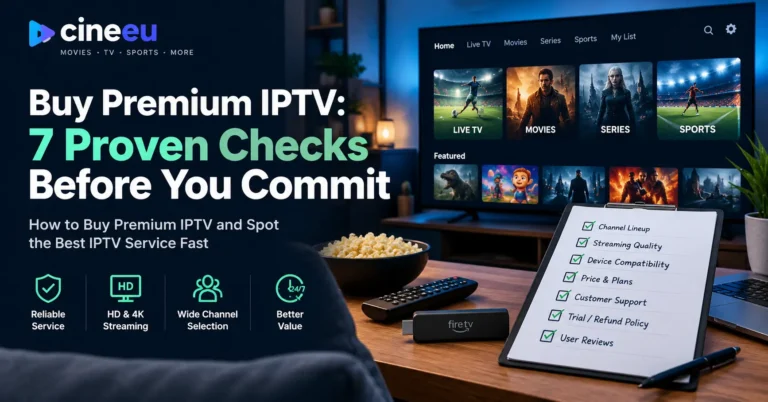
Seven Proven Checks Before You Pay
- Trial tested on a busy evening, with the programme guide loading fully
- Renewal price confirmed in writing
- Connection count matches the number of people who watch at the same time
- App confirmed working on your device, whether that’s IPTV Smarters Pro, TiviMate or your smart TV’s own player
- Cancellation terms read before activation
- Payment by card or PayPal, never bank transfer or crypto
- Offer compared against your own benchmark, with the IPTV Halloween discount price page screenshotted
My Verdict
Late Halloween deals are worth taking when they pass the three checks: a tested provider, a confirmed renewal price and enough connections. Fail any one, and an IPTV Halloween discount price is just a number on a banner.
Use the benchmark, run the two-year sum and pay with protection, and you’ll make a better decision in twenty minutes than most buyers make all season. Black Friday is 25 days away, and the best offer you take this month will be the one that still looks sensible next October.
Frequently Asked Questions
Are IPTV Halloween discount price offers still available in November?
Some are, because providers often extend Halloween offers for a week or two to bridge the gap before Black Friday. Check whether the perks have changed, since extended offers sometimes include fewer extras than the original. A quick message to support will confirm the real end date. Screenshot the page when you buy so the terms can’t quietly shift.
Is an IPTV Halloween discount price better than waiting for Black Friday?
Not always, but the difference is often small enough that waiting isn’t worth the risk. Black Friday tends to bring more providers competing at once and occasionally deeper cuts. Early November comes with less pressure and quicker support. If you’ve already tested a provider and its two-year cost compares well, buying now is perfectly sensible.
How can I tell if an iptv service is legitimate?
Look for a free trial, clear contact details, a working support channel and a stated renewal price. Independent reviews help, especially balanced three-star ones that describe how problems were handled. A provider should also be willing to explain what content it is licensed to offer. Pressure tactics such as resetting countdown timers or crypto-only payment are strong signs to walk away.
How do reseller credits affect the price I pay?
Wholesale credits bought from an iptv panel provider are what resellers spend to create customer lines, with one credit commonly covering one month on many panels. The cheaper a reseller buys credits, the more room it has to offer seasonal discounts. That’s why an established IPTV reseller UK business can sometimes undercut a newer one without cutting corners. It’s also why the renewal price, not just the first payment, deserves your attention.
Can I cancel an IPTV subscription bought in a seasonal sale?
Sometimes, depending on the provider’s terms and how quickly the service started. The Consumer Contracts Regulations 2013 give most online buyers a 14-day cancellation period, but asking for a service to begin immediately can reduce any refund. Read the cancellation policy before activating your line. Paying by card or PayPal also keeps a chargeback or buyer protection claim open if the service fails entirely.
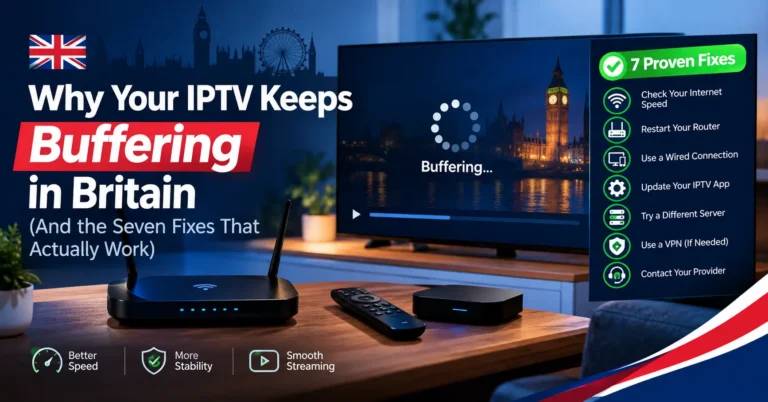
[…] that question properly in Halloween Has Gone, but Are the IPTV Deals Still Worth Grabbing? → /halloween iptv deals still worth grabbing. The short version? A discount on a weak provider is still a weak […]