Book Appointment Now
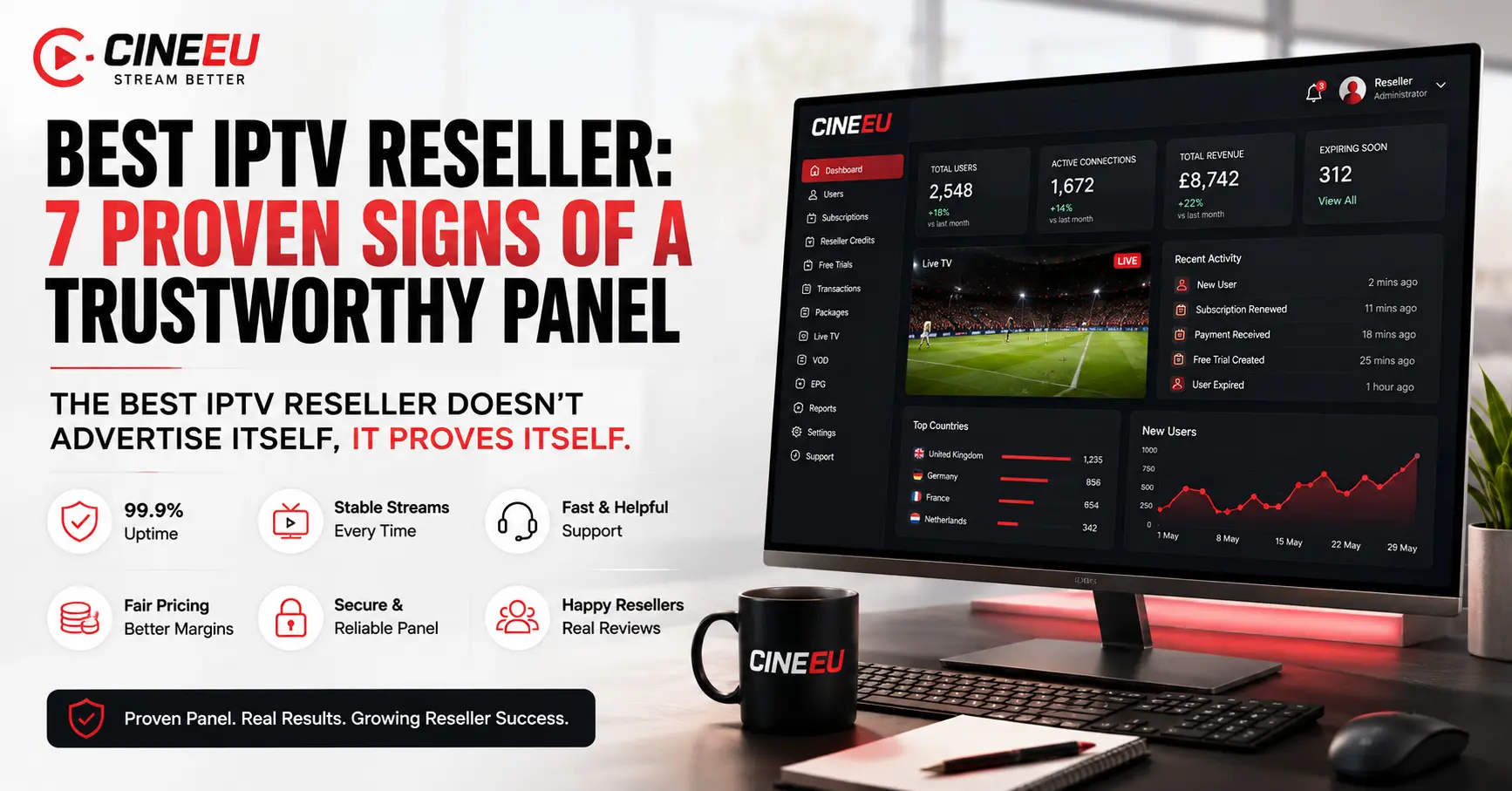
The Best IPTV Reseller Doesn’t Advertise Itself, It Proves Itself
Most of the reseller panels I’ve tested over the years never make it into anything I’d actually recommend. That’s not an exaggeration, it’s just what happens when you’ve spent a decade and a half writing about telecoms infrastructure and watching providers rise and quietly disappear. So when someone asks me how to find the best IPTV reseller worth trusting, I don’t hand them a top ten list. I hand them a way of thinking.
This piece is that way of thinking, laid out properly. No filler, no vague reassurances, just the signals that actually matter once you strip away the sales pages and the inflated review sites.
The Panel Test I Run Before Recommending Anything
Years ago, I helped a small operator in the north of England pick a provider from scratch. He’d narrowed it down to three options purely on price, and honestly, price alone told him almost nothing useful.
We ran a simple test instead. Buy a small credit batch, generate a handful of lines, hammer the panel with requests during a busy evening, and see what happens. Two of the three providers held up fine. One buckled almost immediately.
That test became the backbone of how I evaluate the best IPTV reseller options for anyone who asks. It’s unglamorous, it takes a couple of days, and it tells you more than any glossy comparison chart ever will.
Would you buy a car without test driving it first? Probably not. So why would anyone commit to a reseller panel without doing the equivalent?
Sign One: Server Behaviour Under Real Load
The first thing worth checking isn’t pricing at all, it’s how the panel behaves when demand spikes. Peak evening hours are where weak infrastructure shows itself fastest.
A provider worth calling the best IPTV reseller for your needs should have some form of load balancing or redundancy in place. You don’t need a technical breakdown, but you should be able to ask and get a coherent answer rather than a shrug.
It’s a pattern widely discussed in streaming infrastructure circles: resilience under peak load tends to separate providers that last from those that fold within a year. That’s just as relevant at the reseller layer as it is upstream at the source.
Sign Two: Credit Systems That Respect Your Money
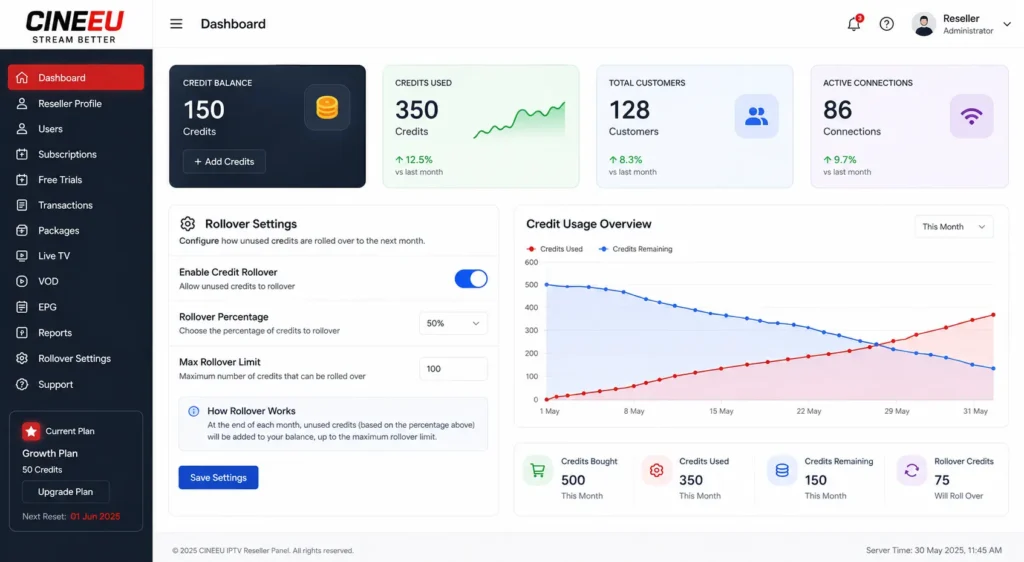
Credits sound simple until you’re the one trying to work out what you’re actually paying per client. Some providers make this transparent. Others bury it in confusing bundle tiers designed to make comparison harder.
Here’s a scenario worth imagining. You buy five hundred credits at a bundled rate, assuming they’ll last you six months based on your client count. Three months in, half of them have expired unused because the provider set a short rollover window you didn’t notice.
That’s not a hypothetical, it happens constantly, and it’s usually preventable with a five minute read of the terms before you buy. The best IPTV reseller provider make credit expiry and rollover policy easy to find, not something buried in a support ticket reply.
Sign Three: Support That Answers Before You’ve Paid
I’ll be blunt here. If a provider is slow to respond to a pre-sales question, that’s not an anomaly, it’s a preview. In my experience, support quality rarely improves once you’re already a paying customer, though it’s worth noting some providers do invest more in retention than acquisition.
Send a genuine question before committing to anything. Ask about redundancy, ask about credit rollover, ask something specific enough that a copy-paste response would be obviously inadequate.
Their reply speed, tone, and level of detail will tell you more than their marketing page ever could.
A Quick Comparison of Panel Tiers
| Feature | Budget Panel | Mid-Tier Panel | Established Panel |
|---|---|---|---|
| Peak-time stability | Inconsistent | Generally stable | Consistently stable |
| Support response | Slow or absent | Same-day typical | Within the hour |
| Credit rollover | Rarely offered | Sometimes offered | Standard practice |
| Sub-reseller support | Not available | Limited | Fully supported |
Tables like this are useful shorthand, but don’t treat them as gospel. Individual providers within each tier vary, and the only way to confirm where a specific option actually sits is to test it yourself.
Sign Four Through Seven: The Details Most Buyers Skip
- Panel interface quality. A cluttered dashboard slows you down every single day you use it, which adds up fast over months of operation.
- Sub-reseller functionality. If you plan to scale, check this early rather than discovering the limitation after you’ve already built a client base.
- Transparent reporting. Can you actually see usage data and line status clearly, or are you guessing?
- Honest communication during outages. Every provider has downtime eventually. What separates the best IPTV reseller options from the rest is whether they tell you about it plainly or go silent.
None of these four factors get much attention in typical reviews, but they’re often what determines whether a reseller relationship lasts a year or ends in frustration within weeks.
Numbered Steps for Testing a New Provider Yourself
- Buy the smallest available credit batch, resisting any upsell toward a larger bundle.
- Generate a handful of test lines and use them across different times of day.
- Send a support question and time how long the response takes.
- Check the dashboard for clarity around credit balance, expiry, and rollover.
- Only after this testing period should you consider committing to a larger purchase.
Skipping straight to step five is exactly how so many resellers end up locked into a provider that doesn’t actually suit them.
Where Most Resellers Go Wrong From the Start
Chasing the cheapest possible credits is probably the single most common mistake I see among newer resellers. Cheap rarely means efficient, it usually means something else is being cut to make that price work.
Underpricing your own subscriptions to compete on cost creates a similar trap. Clients drawn purely by low prices often churn faster than those who value reliability, at least based on the pattern I’ve seen across smaller reseller operations.
Committing to a large credit bundle before any real testing is the third pattern, and it’s the one that causes the most regret. A provider can look fine on a sales page and still fall apart the first time real demand hits their servers.
Is there a provider that gets everything right, every single time? Realistically, no. Even a genuinely strong reseller panel will have an occasional rough patch. What matters is whether problems get resolved quickly and communicated honestly, not whether they happen at all.
Autven approaches reseller infrastructure from that same practical angle, prioritizing stable panel access, clear credit handling, and support that responds when it’s actually needed. It’s one approach among several that work, but it’s built directly around the signs covered here.
how to price your IPTV reseller subscriptions → /pricing-iptv reseller subscriptions
Frequently Asked Questions
Question: What’s the most reliable way to identify the best IPTV reseller for a small operation?
Answer: Start with a small trial purchase rather than trusting review sites alone. Test panel stability during peak hours, send a genuine support question, and check how transparent the credit system actually is. Operations with modest client counts usually benefit more from flexibility and responsiveness than from enterprise scale features.
Question: How many credits should someone buy when starting out with a new provider?
Answer: The smallest available batch is almost always the right starting point. This lets you properly evaluate panel stability and support quality before committing further. Scaling up gradually as demand becomes clearer tends to work out better than an early bulk purchase.
Question: Does the best IPTV reseller always come with the highest price tag?
Answer: Not necessarily, though extremely cheap credits are usually a warning sign rather than a bargain. Fair pricing paired with genuine reliability tends to outperform both the cheapest and the most expensive options over time. The goal is value relative to stability, not price in isolation.
Question: What should I do if my current reseller panel keeps having outages?
Answer: First, check whether outages are being communicated honestly or simply going unaddressed, since that distinction matters more than the outages themselves. If communication is poor and disruptions are frequent, it may be time to test alternative providers using the same trial approach described above. Just account for unused credits, which typically won’t transfer if you switch.
Question: Is switching reseller providers difficult once you’ve already built a client base?
Answer: It’s more manageable than most people expect, provided you plan the transition during a quieter period rather than mid cycle. It’s fairly common for resellers to switch providers at least once while finding the right long term fit, particularly in their first year or two. Clear communication with your own clients during the switch tends to make the process smoother.