Book Appointment Now
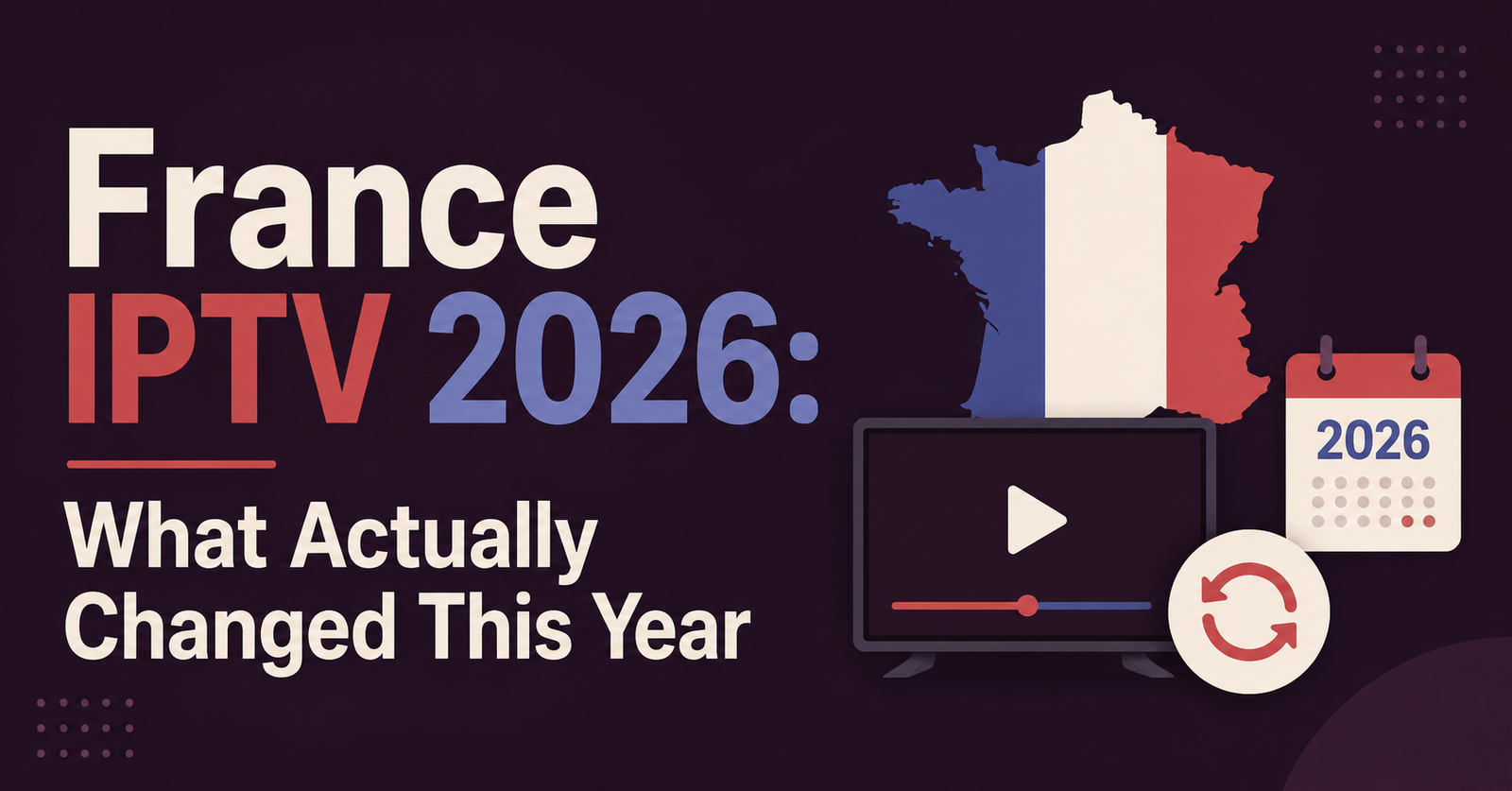
France IPTV 2026: What Actually Changed This Year
France IPTV 2026 questions almost always come down to one thing: whether the service you’re using, or thinking about using, is still going to be working properly once regulatory enforcement tightens further this year. That’s not a hypothetical concern. France’s audiovisual regulator has spent the past two years building the legal and technical tools to shut down unlicensed streaming services faster than ever, and 2026 is the year those tools moved from planning stage into daily use.
What’s Actually Changed With France IPTV 2026 Enforcement
For a long time, French enforcement against unlicensed streaming focused almost entirely on the businesses selling access, not the people watching. That’s shifted. Earlier this year, French authorities handed out the country’s first fines to individual subscribers, not just IPTV resellers, after seizing customer databases from dismantled pirate networks. The penalties were modest by comparison to what sellers face, but the precedent matters: your details being sat inside a reseller’s spreadsheet is no longer a purely theoretical risk.
The bigger structural change is speed. France’s regulator has been building an automated blocking system designed to cut off unlicensed streams in near real time, rather than the multi-day manual process that used to let pirate services simply switch domains and carry on. Parliament passed legislation in mid-2026 formalising this, giving the regulator the ability to push new blocking targets to internet providers while a broadcast is still live. The stated aim is straightforward: stop pirate platforms from outrunning enforcement by hopping to a new address every time one gets blocked.
None of this makes IPTV itself illegal. IPTV is a delivery method, not a content category, and millions of French households use fully licensed IPTV services every day without any of this touching them. What’s changed is the margin for error if your provider isn’t operating with proper distribution rights. A service that was quietly tolerated eighteen months ago can now find itself blocked within hours rather than weeks, and if that happens mid-subscription, you’re the one left without a working service and, in some cases, exposed to the fallout from whatever customer data that provider was holding.
Warning Signs Worth Taking Seriously
Some signals matter more than others when you’re trying to work out whether a service is likely to hold up under this kind of enforcement pressure.
| Warning sign | Why it matters |
|---|---|
| No clear company details or contact address | Legitimate operators are traceable; unlicensed ones deliberately aren’t |
| Full premium sports lineup at a price far below licensed rates | Rights fees for live sport are expensive; unrealistic pricing usually means unpaid rights |
| Payment only through informal channels with no receipt or invoice | Makes it harder to dispute charges and signals the operator wants no paper trail |
None of these on their own proves a service is unlicensed. Taken together, though, they’re a reasonable basis for asking harder questions before you hand over payment details.
Pro tip: Ask directly whether the provider can show it holds distribution rights for the channels it’s selling. A legitimate operator won’t dodge the question, and how they respond tells you almost as much as the answer itself.
Setting Up an IPTV Subscription the Sensible Way
Once you’ve settled on a provider, the actual setup is fairly mechanical. You’ll get login credentials or an activation link, install the app on whichever device you’re using, and the channel list should load within a few minutes. Firestick, Android boxes, Smart TVs and iOS devices all handle this in broadly the same way, though the exact app you install will vary by device.
Where people run into trouble usually has nothing to do with the provider. A router struggling under several streaming devices at once, an outdated app version, or a household VPN interfering with the connection account for most buffering complaints. It’s worth testing on a wired connection before assuming the service itself is at fault, particularly during high-demand broadcasts when everyone’s household bandwidth is under strain at the same time.
Pro tip: Keep your activation confirmation somewhere you can find it again. If a compliant provider does get caught up in a blocking action against a shared IP range or hosting environment, having proof of a paid, legitimate subscription speeds up getting reconnected elsewhere considerably faster than starting from scratch.
Where the Reseller Side Fits Into This
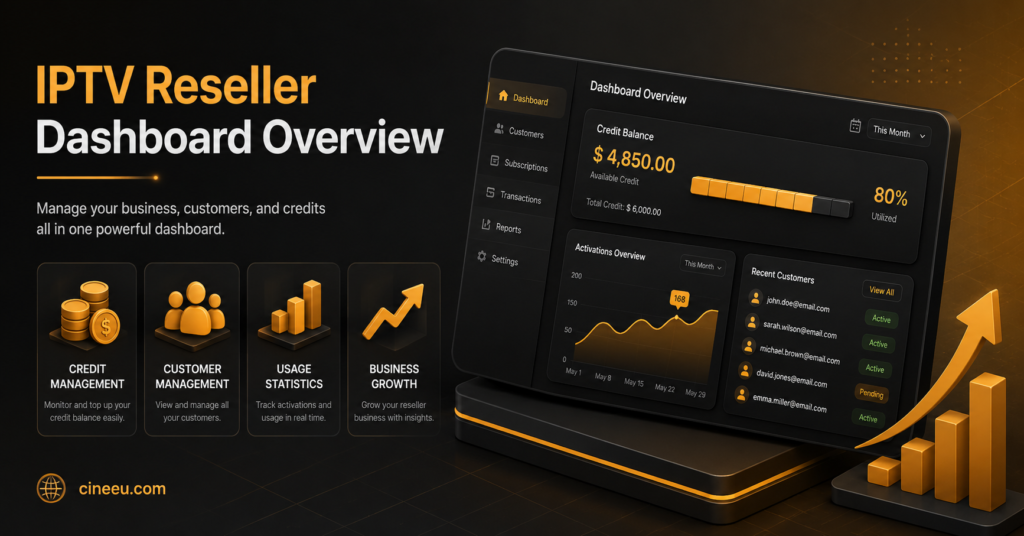
France’s IPTV reseller market hasn’t disappeared under tighter enforcement. It’s shifted toward operators who can demonstrate transparency about what they’re selling and where the content comes from. If you’re considering the reseller route rather than just subscribing as a viewer, the practical starting point is a reseller panel that lets you buy credits, create customer accounts through a dashboard, and set your own retail margins without taking on a fixed monthly commitment.
The responsibility that comes with this shouldn’t be underestimated given the current enforcement climate. You become the first point of contact when something goes wrong for a customer, and being able to explain clearly where your credits come from and how billing works isn’t optional anymore, it’s what separates a reseller who survives a wave of enforcement from one who doesn’t. A detailed UK IPTV reseller panel guide is worth reading properly before committing money, particularly the sections on customer documentation and support escalation.
Pro tip: Start with a small credit pack and a handful of trusted customers before scaling up. It’s far easier to judge whether a panel is stable and well supported when your exposure is limited.
Common Questions About IPTV in France
Is IPTV illegal in France?
No, not as a technology. IPTV is simply a method of delivering television over an internet connection, and licensed operators use it legally throughout the country. The legal question always comes down to whether the specific provider holds proper distribution rights for what it’s selling.
Can I actually be fined for watching an unlicensed IPTV service?
Individual subscribers have been fined in France this year for the first time, though enforcement so far has concentrated overwhelmingly on the businesses selling unlicensed access rather than everyday viewers. That said, the direction of travel suggests subscriber-level enforcement is more likely to continue than fade.
What is ARCOM and what can it actually do?
ARCOM is France’s audiovisual regulator, responsible for licensing legitimate operators and pursuing unlicensed ones. It can compel internet providers to block services distributing content without proper rights, and its powers to do this quickly have expanded significantly through 2026.
Will real-time blocking affect a subscription I’ve already paid for?
Not if your provider genuinely holds the rights to what it’s broadcasting. Real-time blocking targets unlicensed streams specifically. It’s a reason to check your provider’s standing beforehand, not a reason to assume every service is at risk.
How can I check whether a subscription base for UK IPTV subscription plans suits my household before committing?
Ask for a short trial period and test it on your actual device before paying for anything longer term. A working trial tells you more about stream quality and channel coverage than any amount of marketing copy.
What should I look for in general when comparing options?
Beyond price, look at what actually makes a provider reliable: transparent contact details, realistic pricing for the content on offer, and a support process that doesn’t disappear the moment something breaks.
Conclusion
France IPTV 2026 isn’t a story about the technology becoming riskier. It’s a story about enforcement finally catching up to a market that grew faster than the rules around it. The practical response is the same one that’s always worked: check who you’re actually paying, be sceptical of pricing that doesn’t match what live sports rights genuinely cost, and treat a working trial as the minimum before committing to anything longer. Viewers who do that have very little to worry about from any of this. Viewers who don’t are the ones most likely to find themselves with a black screen at the worst possible moment.
Provider Verification Checklist
- Confirm the provider has traceable company or contact details, not just a payment link
- Compare the price against what licensed sports coverage realistically costs
- Test with a short trial on your actual device before paying for a longer plan
- Keep a copy of your activation confirmation and any payment receipt
- Ask directly how the provider handles distribution rights and note how they respond
- Check what happens to your access if a shared server or IP range gets blocked