Book Appointment Now
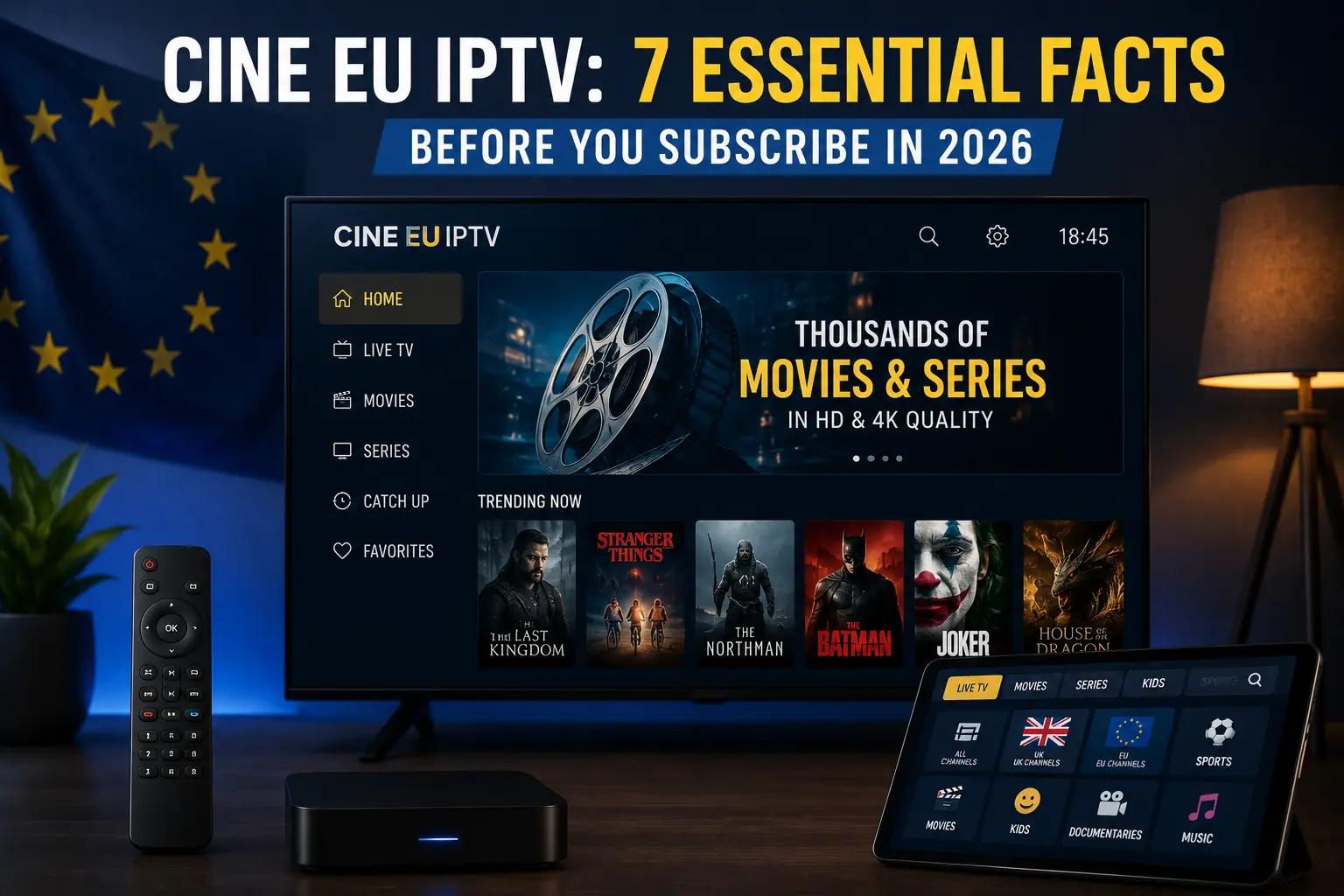
Cine EU TV Explained: The Complete 2026 Viewer’s Guide
I remember sitting in a rented flat in Manchester a few years back, flicking through channel after channel on a cable box that cost me nearly sixty pounds a month, wondering why half the content felt outdated and the other half simply wasn’t there. That frustration is exactly why services like Cine EU TV have found a loyal following across the continent. If you’ve ever asked whether there’s a smarter way to watch European entertainment without eye watering contracts, you’re not alone.
Cine EU TV has become a name that comes up increasingly often in streaming communities and comparison sites. I write about the telecoms and streaming space for a living, and I’ve watched dozens of services rise and fall over the years. This one deserves a proper, honest look, warts and all.
What Exactly Is Cine EU TV?
At its core, Cine EU TV is a streaming platform built to bring European film, television and live entertainment to viewers who want flexibility without the baggage of a traditional broadcast contract. It typically bundles films, series and live channels into a single app or set top experience. Across France, Belgium and parts of the UK, it’s increasingly used as shorthand for accessible European streaming.
What sets Cine EU TV apart from a standard streaming app is that it isn’t only built for end viewers. It leans into film libraries and live broadcasting for households, while also operating a business side that supports resellers and subscription providers across the continent.
I’ll be honest with you though. Not every provider using the Cine EU TV branding operates identically, and that inconsistency is something worth understanding before you hand over any money.
The Full Brand Picture: Streaming Apps, IPTV Subscriptions And Reseller Panels
This is the part a lot of comparison articles skip over. Cine EU is genuinely a broader brand than a single app. It covers three distinct arms of the same business, and understanding all three helps explain why the name shows up in so many different contexts online.
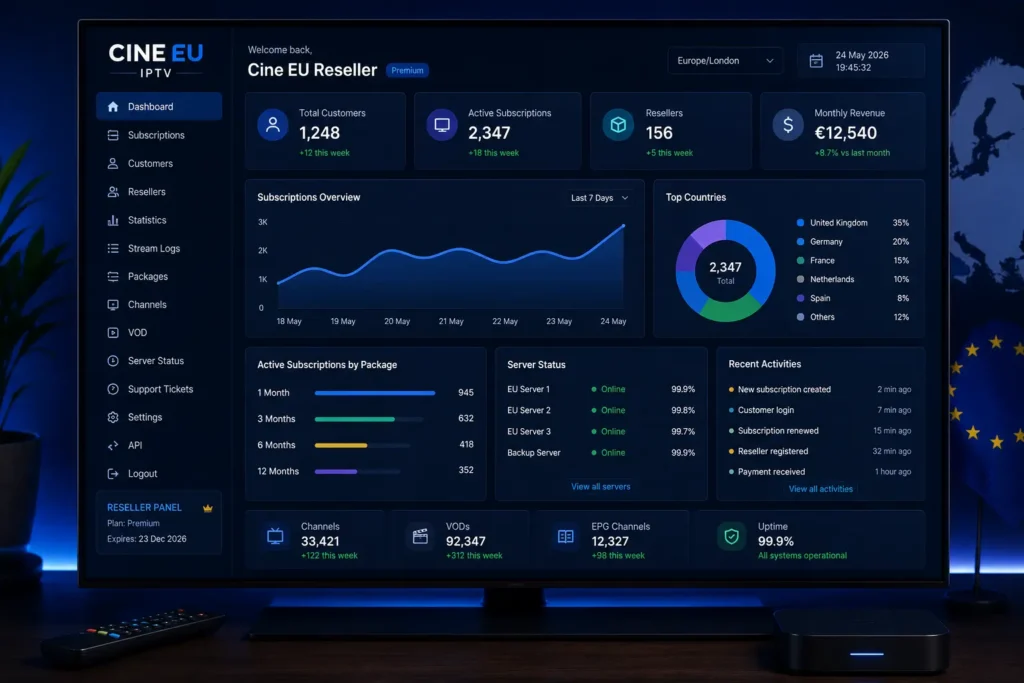
First, there’s the consumer facing streaming app, which is what most casual viewers mean when they say Cine EU TV. Second, there’s a direct IPTV subscription service aimed at households wanting live channels and video on demand without going through a middleman. Third, and this is the part often overlooked, Cine EU also runs IPTV reseller panel for people who want to build their own subscription business rather than simply watch content.
That reseller layer matters if you’re coming at this from a business angle rather than a household one. Anyone researching a UK IPTV reseller opportunity will likely bump into Cine EU somewhere in that research, because it operates across the full pipeline from content delivery through to reseller infrastructure. Its footprint spans all of Europe rather than sitting in a single national market, which is fairly unusual for a brand of this size.
Streaming, IPTV And Reseller Services: Clearing Up The Confusion
I think a lot of confusion around Cine EU TV, and streaming platforms generally, comes from treating several different things as if they’re the same thing. They’re related, but they’re not identical, and the distinction genuinely matters.
Internet streaming is the broad umbrella technology, covering anything delivered over the internet rather than a broadcast tower or satellite dish. IPTV is more specific. It refers to television content delivered over IP networks, which is the underlying technology behind services like Cine EU TV. A licensed streaming service is one where the provider holds proper distribution rights for the content it offers, while an unlicensed IPTV service may be redistributing content without those rights.
Then there’s the reseller layer, which is a business relationship rather than a content category. A reseller buys access from a supplier, in this case potentially Cine EU’s own panel infrastructure, and sells subscriptions onward to end customers under their own branding.
What is an IPTV service and how does it actually work → /iptv-service-explained/
Keeping these categories separate in your head makes it much easier to evaluate any Cine EU TV offer you come across, whether you’re shopping as a viewer or considering the reseller side of the business.
Why Cine EU TV Has Gained Ground Across Europe
You might be wondering why this particular brand has gained so much traction over the last year or two. Part of it comes down to timing. As cable prices across the UK and wider Europe have climbed steadily, viewers have gone looking for alternatives, and Cine EU TV positioned itself directly in that gap.
There’s also the multilingual appeal. A lot of European households are multilingual by necessity, and Cine EU TV tends to offer content in French, Dutch, Portuguese and English, which broadens its reach far beyond a single market. That’s a genuinely useful feature if your household, like mine, ends up switching languages depending on who’s holding the remote.
Word of mouth has done a fair amount of the work too. Streaming communities move quickly, and once a handful of trusted voices start recommending something, momentum tends to build fast. Whether that momentum is fully deserved is something worth examining rather than assuming.
Getting Set Up: What The Process Actually Involves
Setting up Cine EU TV isn’t drastically different from configuring any other streaming or IPTV service. You’ll usually need a subscription code or login credentials, a stable internet connection, and a compatible app or player.
Here’s roughly how the process tends to unfold for most users:
- Choose a subscription plan and complete payment through the provider’s website or reseller.
- Receive your login credentials or M3U playlist link via email.
- Download a compatible player app on your device of choice.
- Enter your credentials or playlist URL into the app.
- Wait for the channel and content list to populate, which usually takes a few minutes.
It sounds simple because, honestly, it mostly is. Where people run into trouble is choosing a reliable provider in the first place, which is worth its own dedicated read.
Disclosure: GB Reseller is a partner brand we work with separately from this review, and we’ve noted that relationship here for transparency rather than folding it into the setup steps above.
Devices and Compatibility
Cine EU TV generally supports a wide spread of devices, which is one of its stronger selling points. Amazon Firestick, Android boxes, smart TVs and mobile devices are all commonly compatible.
That said, compatibility can vary between resellers, so it’s worth confirming device support before you commit to a longer subscription. I’ve seen readers get caught out buying an annual plan only to discover their older smart TV wasn’t properly supported.
Channels, Content And What You’re Really Paying For
This is where Cine EU TV tends to differentiate itself. Beyond the standard live channel bundle, there’s usually a substantial video on demand library covering recent releases, classic European cinema and box sets.
Live sport is often included too, though coverage quality can shift depending on your provider and region. Some packages lean heavily into French Ligue 1 coverage, while others prioritise wider European football and entertainment channels.
It’s worth asking what you’ll actually use day to day. Are you someone who wants live news and sport running constantly in the background, or are you more interested in the film library for weekend viewing? Cine EU TV can serve both crowds, but the value shifts depending on which one describes you.
Cine EU TV Versus Traditional Cable: A Fair Look
Comparisons between streaming platforms and cable are everywhere, and most of them are frustratingly one sided. I want to give you something closer to reality.
| Factor | Cine EU TV | Traditional Cable |
|---|---|---|
| Monthly cost | Generally lower | Often £50 plus |
| Contract length | Usually flexible, monthly options | Frequently 12 to 24 months |
| Channel variety | Broad European and international mix | Strong regional coverage, fewer international options |
| Setup complexity | Requires an app and internet connection | Professional installation typically included |
| Reliability | Dependent on your internet and provider | Generally stable, dedicated infrastructure |
Neither option is objectively superior. Cable still wins on guaranteed reliability and dedicated infrastructure, while Cine EU TV wins on flexibility and cost. For a broader breakdown of how these two approaches stack up across European markets, this comparison is genuinely worth reading.
IPTV vs Cable TV in Europe → /iptv-vs-cable-tv-europe/
The Legal Grey Area Nobody Wants To Discuss
I’m not going to dance around this. The legality of IPTV and streaming services like Cine EU TV depends heavily on how the underlying content is licensed. Some providers operate with proper licensing agreements. Others don’t, and that distinction matters enormously.
Ofcom has repeatedly flagged concerns around unlicensed IPTV activity within the UK, and viewers should take that seriously rather than dismissing it as background noise. Streaming something that hasn’t been properly licensed can carry real consequences, even if the interface looks polished and professional.
My honest advice? Do your homework on any provider before subscribing. Check reviews, ask direct questions about content licensing, and be wary of deals that seem too cheap to be sustainable. A service that costs £3 a month for hundreds of premium channels should raise your eyebrows, not lower your guard.
Pricing And Value: Does The Maths Add Up?
Pricing for Cine EU TV style services varies depending on the reseller, package length and included features. As of August 2026, monthly plans tend to sit somewhere between £8 and £20, while annual plans can bring that average down further. Reseller pricing shifts fairly often, so treat these as a general guide rather than a fixed rate.
Compare that against a typical UK cable and broadband bundle, and the savings become obvious fairly quickly. Over a year, the difference can easily run into hundreds of pounds. That’s not a small consideration for households watching their budgets in 2026.
But value isn’t only about price. It’s about whether the service actually delivers consistent uptime, decent picture quality and genuine customer support when something goes wrong. A cheap Cine EU TV subscription that constantly buffers isn’t good value at all, no matter how low the monthly fee looks on paper.
Common Problems And How To Sidestep Them
Every streaming service has its rough edges, and Cine EU TV is no exception. Understanding the common pitfalls ahead of time saves a lot of frustration later.
- Buffering during peak hours, often tied to server load or your own internet speed
- Inconsistent channel availability, particularly around live sporting events
- Limited customer support from smaller resellers
- Sudden service outages without clear communication
- Confusing subscription renewal terms
Most of these issues can be minimised by choosing an established provider with a genuine track record rather than the cheapest option you can find. Industry reporting on the wider IPTV and streaming market has consistently pointed to service reliability as one of the biggest differentiators between providers that last and those that quietly disappear within months. That pattern holds true for Cine EU TV providers as well.
So, Is Cine EU TV Worth Your Time?
There isn’t a single answer that fits every household. If you value flexibility, multilingual content and a genuine alternative to expensive cable contracts, Cine EU TV offers a compelling package. If rock solid reliability and zero technical fuss matter more to you than saving money, traditional cable might still suit you better.
And if you’re approaching this from the business side rather than the viewer side, the reseller panel option is worth a proper look on its own terms, since it’s a genuinely different decision to a household subscription.
What I’d suggest, based on years of watching this space evolve, is treating your first month as a trial rather than a commitment. Test the streams during peak evening hours, check whether your preferred content actually loads consistently, and only then decide whether to commit to a longer plan.
Streaming has changed dramatically over the past decade, and brands like Cine EU represent where a lot of that change is heading, spanning apps, subscriptions and reseller infrastructure under one roof. Whether it fully replaces your existing setup or simply becomes one more tool in your entertainment lineup, that’s genuinely up to you and how your household actually watches television.
Frequently Asked Questions
Is Cine EU TV legal in the UK?
Legality depends entirely on how a specific provider licenses its content, so there isn’t a single blanket answer. Some Cine EU TV providers operate with proper licensing agreements, while others exist in a legal grey area that carries real risk. Always research a provider’s licensing status before subscribing, and treat suspiciously cheap deals with caution. Ofcom has previously commented on unlicensed IPTV activity within the UK market.
How much does Cine EU TV typically cost?
As of August 2026, monthly pricing generally ranges between £8 and £20, depending on the package and included features. Annual subscriptions often work out cheaper per month than paying monthly. Prices can vary significantly between resellers, so comparing a few options before committing is worthwhile.
What devices work with Cine EU TV?
Most Cine EU TV services support Firesticks, Android boxes, smart TVs and mobile phones. Compatibility can vary slightly between providers, so it’s sensible to confirm device support before purchasing a longer subscription. Older smart TVs sometimes need an additional streaming device to run the app properly.
Does Cine EU TV cover the whole of Europe?
Yes, Cine EU operates across multiple European markets rather than a single country, offering streaming apps, IPTV subscriptions and reseller panels under one brand. Content availability and language options can still vary by region, so it’s worth checking what’s on offer in your specific market. This broad footprint is part of why the brand comes up so often across different European streaming discussions.
How does Cine EU TV compare to a standard IPTV reseller service?
The core technology is similar, since both rely on internet delivered streaming rather than traditional broadcast infrastructure. Cine EU actually operates its own IPTV reseller panels alongside its consumer app, so the two aren’t entirely separate businesses. Choosing between a direct subscription and a reseller route usually comes down to whether you’re buying as a viewer or building a subscription business of your own.