Book Appointment Now
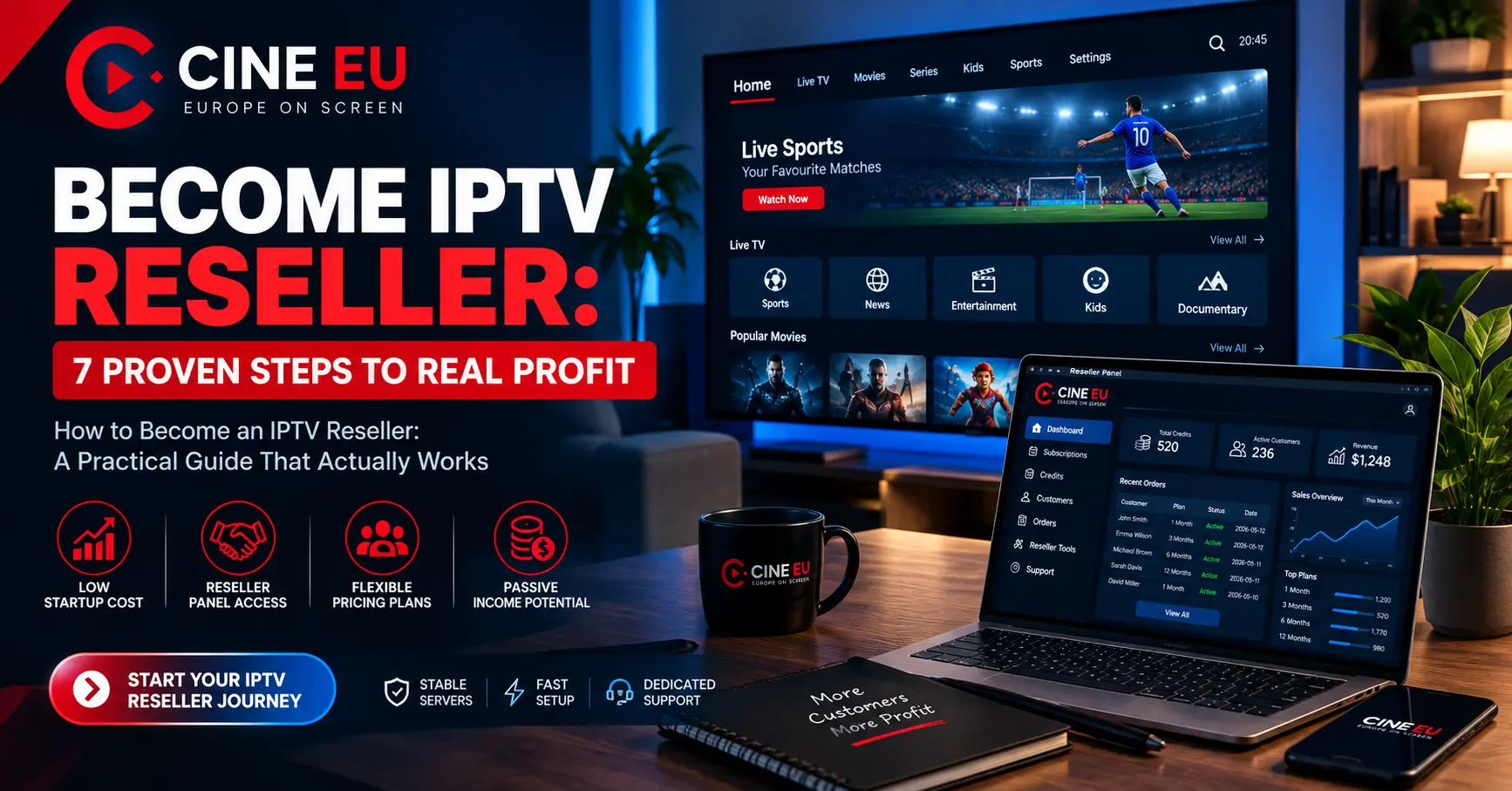
How to Become an IPTV Reseller: A Practical Guide That Actually Works
I still remember the first time a friend asked me how to become IPTV reseller and turn a weekend hobby into something that actually paid the bills. He’d been buying an iptv premium subscription for himself for years, loved it, and figured selling access to others couldn’t be that different from reselling phone cases on the side. It’s more layered than that, but not in a way that should scare anyone off.
Fifteen years writing about telecoms and streaming infrastructure has taught me that the people who succeed when they become iptv reseller aren’t the ones with the flashiest panel or the biggest ad spend. They’re the ones who understand the risks going in and build real systems around them.
What It Actually Means to Become IPTV Reseller
At its core, when you become iptv reseller you’re buying access credits from an upstream provider, usually in bulk, and reselling individual subscriptions to end users at your own price point. You’re not building the content pipeline yourself. You’re not running the servers that stream the content. You’re the customer-facing layer sitting between infrastructure and the person watching television on their sofa.
This distinction matters because it shapes what you actually need to be good at. If you enjoy customer service, understand how to market on Telegram or WhatsApp groups, and can troubleshoot a buffering stream at eleven at night without losing your patience, you already have a decent chunk of the required skill set. The technical heavy lifting sits with your supplier, not with you, though the legal exposure often sits with you regardless.
Isn’t that the appeal, though? A relatively low technical barrier, modest upfront cost, and a product people genuinely want on their televisions. That combination is exactly why so many people type “how do I become iptv reseller” into a search bar every single month.
Who Should Become IPTV Reseller and Who Shouldn’t
Not everyone should become iptv reseller, and I say that as someone who genuinely likes this niche. If you’re looking for pure passive income with zero ongoing involvement, this probably isn’t your business model. Customers message at odd hours, renewals need chasing, and outages happen regardless of how good your supplier is.
If you already run a small side hustle, have some comfort with basic tech support, and enjoy building recurring monthly revenue, the pieces fit together nicely. Plenty of people who decide to become iptv reseller start with a handful of friends and family, then grow organically through word of mouth.
A quick gut check: are you comfortable explaining, calmly, for the fifth time that day, why someone’s router needs a restart? If the answer is yes, you’re probably wired for this kind of customer-facing work. If the thought exhausts you already, this may not be your lane.
Smart IPTV, IPTV Premium, and Why the Panel You Pick Matters
Here’s where things get confusing fast for beginners. Smart IPTV refers to an app, commonly used on Samsung and LG smart TVs, that customers install to load their playlist. It’s not a service in itself. It’s simply the delivery mechanism sitting on the customer’s screen.
Iptv premium, by contrast, usually refers to a tier of service, meaning more channels, better stream stability, and often multiple simultaneous device connections per subscription. When you decide what setup to use as you become iptv reseller, you’ll typically be handed access to a panel, often something built on the widely used Xtream Codes framework, where you manage credits and generate customer lines.
Not every panel is built the same way. Some feel clunky and dated, with confusing menus and no real analytics. Others feel closer to a proper SaaS dashboard, complete with usage graphs and sub-reseller support if you eventually want to bring other resellers on underneath you.
A quick anecdote here. I once tested three different reseller panels back to back for a client comparison piece, and the difference in dashboard responsiveness alone would have cost one of them a third of their customer base through sheer frustration. Test the panel thoroughly before you commit real money to bulk credits.
The Legal and Risk Picture You Need Before You Start
This is the part too many guides gloss over, and it’s the part I want to be straight with you about. The legality of iptv reselling hinges almost entirely on whether the underlying content is properly licensed for redistribution. If a supplier is streaming premium sports or premium cable channels without the rights to do so, reselling access to that stream can expose you to copyright claims, even if you never touched the servers yourself.
Enforcement varies enormously by country. Regulators in the United Kingdom and the United States have pursued both large scale operations and individual resellers in recent years, while other jurisdictions have far less active enforcement. That inconsistency doesn’t mean the risk is zero wherever you live. It means the risk is unevenly distributed and hard to predict with confidence.
There’s also a quieter, more immediate risk that has nothing to do with courts: payment processors. Stripe, PayPal, and most mainstream processors explicitly prohibit unlicensed streaming resale in their terms of service, and accounts get frozen or terminated without much warning when this is discovered. Many resellers end up routing payments through high risk merchant processors or cryptocurrency instead, which solves the freezing problem but adds its own friction for customers unfamiliar with crypto payments.
None of this means you shouldn’t become iptv reseller. It means you should go in with open eyes, ideally after a conversation with a solicitor familiar with digital media law if you’re planning this as more than pocket money. Treat the legal ambiguity as a real operating cost, not a footnote.
The Real Costs Nobody Mentions
Credits aren’t free, obviously, but the sticker price is only part of the equation. You’ll want a domain and basic hosting if you’re building any kind of storefront, along with a payment setup that won’t freeze the moment volume spikes unexpectedly, as covered above. A simple Telegram bot or lightweight CRM also goes a long way toward keeping renewal dates organized.
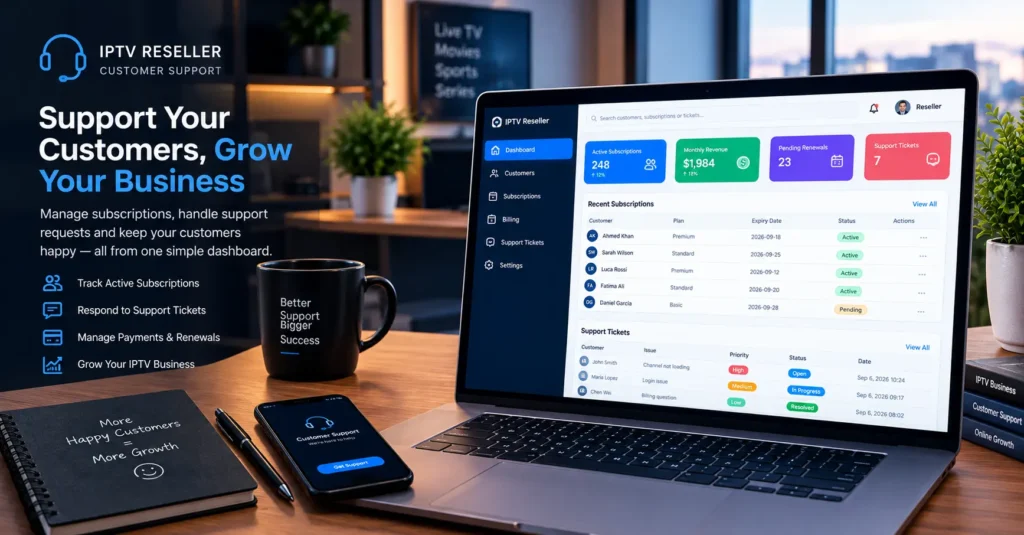
Then there’s time, which is the cost most people underestimate. Customer support eats hours you didn’t budget for, especially in the first few months when you’re still learning which issues are genuinely server side and which ones are just the customer’s own router acting up. Don’t go into this expecting to become iptv reseller overnight without consistent daily effort.
Refunds and chargebacks happen too, more often than beginners expect, especially given the payment friction described earlier. Build a financial buffer into your pricing so one rough week doesn’t wipe out your entire month’s margin.
Finding a Best IPTV Subscription Supplier You Can Trust
This is arguably the single most important decision you’ll make. A best iptv subscription supplier for your business needs consistent uptime, responsive support during outages, and transparent credit pricing that doesn’t shift without warning halfway through the month.
Ask other resellers in community forums which suppliers have weathered outages gracefully versus which ones went silent for days. Reddit threads and specialist forums like those hosted by Cord Cutters News often surface honest, unfiltered feedback that a supplier’s own polished sales page will never show you.
Don’t be afraid to ask for a trial batch of credits either. A supplier genuinely confident in their infrastructure won’t flinch at giving you a small test allocation before you commit to a larger bulk purchase.
Pricing Your Service Without Racing to the Bottom
New resellers often make the mistake of undercutting everyone else in the market, assuming the lowest price automatically wins the most customers. It rarely works out that way. Customers who chase the cheapest option available also tend to churn the fastest the moment a slightly cheaper competitor appears somewhere else.
Instead, price around reliability. If your smart iptv setup rarely buffers and your support actually replies within the hour, you can charge noticeably more than the rock-bottom sellers and still retain customers for years at a time.
A quick comparison of common pricing approaches:
| Approach | Typical Outcome |
|---|---|
| Lowest price in the market | High churn, thin margins, constant refund requests |
| Mid-market with strong support | Slower growth but far better long-term retention |
| Premium tier with device limits and 24/7 support | Fewer customers, higher lifetime value per customer |
Building Customer Trust in a Crowded Market
The iptv space carries a reputation problem, partly deserved, and you’ll be fighting that perception whether you like it or not once you become iptv reseller. Clear communication about exactly what customers are paying for, honest uptime expectations, and a simple, written refund policy go a long way toward separating you from the fly-by-night sellers flooding social media.
Consider offering a short trial window, even just twenty-four or forty-eight hours, so customers can test stream quality on their own home network before committing to a full iptv premium package. It costs a little in credits upfront, but it saves disputes and one-star reviews later.
setting up a customer support workflow for resellers → /iptv reseller
Marketing That Actually Brings Buyers
You don’t need a massive advertising budget to become iptv reseller with a genuinely steady customer base. Word of mouth still does most of the heavy lifting in this niche. A single satisfied customer telling three friends is worth more than a poorly targeted paid ad campaign that burns through cash quickly, and it carries none of the platform bans that come with advertising restricted content directly.
A basic landing page explaining your packages clearly, an active Telegram channel for updates and outage notices, and steady participation in relevant online communities will build your visibility over time. Short video demos comparing your smart iptv setup against competitors also tend to convert well, since buyers want proof of stream quality before they hand over payment.
Would you trust a seller who never actually shows their product working? Most people wouldn’t, and there’s no reason your future customers should be any different.
Panel Comparison at a Glance
- Basic panels: cheap credits, minimal dashboard features, best for testing the waters before you fully commit
- Mid-tier panels: reasonable analytics, sub-reseller support, decent for scaling toward a few hundred active customers
- Enterprise panels: full white-label options, API access, built for those planning to eventually run their own reseller network underneath them
Common Mistakes New Resellers Make
Overpromising channel counts is a frequent one. If your upstream provider drops a particular sports package overnight, often due to the exact licensing issues described earlier, you need a plan for communicating that change to customers without losing their trust entirely.
Another frequent misstep is ignoring device compatibility altogether. Not every customer runs smart iptv on a compatible smart TV app. Some need help with Firestick setups, Android boxes, or MAG devices, and being unprepared for that support burden catches a lot of beginners completely off guard.
Treating this purely as passive income rarely works out well either. The resellers who genuinely build something lasting show up daily, at least during the early months, to handle renewals, troubleshoot issues, and monitor for the outages and takedowns that are simply part of this industry.
Scaling Once You’ve Proven the Model
Once you’ve got a stable base of paying customers and a supplier you genuinely trust, scaling becomes a question of systems rather than hustle. This is often the point where people who set out to become iptv reseller as a small side project start considering whether to bring on a sub-reseller or hire part-time support.
Automating renewal reminders, documenting your setup instructions for common devices, and tracking churn by month all become far more important at this stage than they were in your first ninety days. It’s also the point to revisit your legal and payment setup, since higher volume tends to attract more scrutiny from both processors and rights holders.
Starter Checklist
- Choose a reseller panel and request a trial batch of credits before buying in bulk
- Compare at least two or three suppliers on uptime history and support responsiveness
- Research the legal landscape in your country and consider speaking with a solicitor
- Set pricing tiers around reliability rather than chasing the lowest price point
- Decide on a refund, trial, and payment processing policy before your very first sale
Frequently Asked Questions
Is it legal to become iptv reseller?
Legality depends almost entirely on whether the underlying content is properly licensed for redistribution, and this varies significantly by country and by supplier. Regulators in several countries have pursued both large operations and individual resellers, so the risk is real even if enforcement is inconsistent. Consulting a solicitor familiar with digital media law is a sensible step before treating this as more than a small side project.
What’s the difference between smart iptv and a standard streaming app?
Smart iptv specifically refers to the app most commonly used on Samsung and LG televisions to load a customer’s playlist file. Other devices, like Firestick or Android boxes, typically rely on different apps entirely. Understanding which devices your customers actually use helps you provide accurate setup instructions and cuts down on avoidable support tickets.
How much does it cost to become iptv reseller?
Startup costs vary widely depending on the panel and supplier you choose, but many entry-level credit packages start relatively low, sometimes under a hundred dollars for a first batch. Ongoing costs include hosting, payment processing fees that tend to run higher for this category, and the time investment required for customer support. Budgeting realistically for both money and time will save a great deal of frustration later.
What makes a best iptv subscription supplier trustworthy?
Look for consistent uptime history, responsive support during outages, and transparent pricing that doesn’t change without notice. Community feedback from other resellers is often the most reliable indicator available, since suppliers rarely advertise their own weaknesses. A willingness to offer trial credits before a bulk purchase is also a strong positive sign worth weighing heavily.
Can I offer iptv premium packages alongside a basic tier?
Yes, and many resellers who successfully become iptv reseller structure their business exactly this way, offering a basic tier for price sensitive customers and an iptv premium tier with more connections or better support for those willing to pay more. This tiered approach also helps smooth out revenue during slower months. Just make sure the technical difference between tiers is genuine and clearly explained upfront.